
This article is the first in a three-part series on Contemplative Cultures. The second and third posts are: Contemplative Animal Cultures, and Contemplative Human Cultures. In each of the three posts, I address the essence of the three cultures similarly. The perceived differences between them relate to form and function, not the unifying spirit of life. I employ similar descriptions and phrases throughout, somewhat repetitively, because this general topic is reflexively dismissed by many of us. Please read each of the three articles carefully in order to feel their similarities.
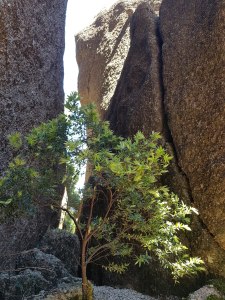
Naturally living plants arise within profoundly contemplative cultures.
Plant cultures comprise trillions of vigorous interspecies relationships, thriving in complexly integrated groups, stands, clumps, and forests much more often than in solitude.
All of a forest’s species – both animals and plants – are sentiently existing, simply because they are alive, not merely because we might deem them to be so.
When the slimy lobes of human brain tissues generate flimsy thoughts that imagine consciousness being exclusively ours, we dismiss all plants’ billions of years of spontaneously intelligent living.
Long before so-called “higher” animals and humans paddled, flapped, and ambulated, countless contemplative plant cultures thrived across the Earth.
Plants were our origins, and remain our “familial” companions.

With tree-like lungs and exquisite nervous systems, humans are somewhat like fern fronds… unfurling imperceptibly… our every inhalation of plants’ life-giving breath-of-air sustaining our brief existence.
Aside from some recently brainy creatures appearing out of *watery haars, the primary whole-Earth culture yields no thoughts – at all!
Not long ago, among all the Earth’s living beings, and within the vastness of this spiralled galaxy, in terms of living consciousness, the great plant cultures’ contemplative feeling-awareness flourished, with laboured conceptual thinking yet to emerge.
 Early naturally living human cultures were also contemplative ones.
The cultures of earlier humans were diversely integrated with all the non-human cultures around them, with their feeling-observations and awarenesses reaching across great distances, including deep space.
Similarly, the plant cultures are also intimately yoked with the stars and moon, and beyond.
Essentially, planet Earth is one multispecies contemplative culture, arising in endless Mystery.
The consciousness and awareness of every living being, as well as the Earth itself, is forever ungraspable.
Over the last 4,000 years, and immensely increasing through the most recent three centuries, humans have visited upon plant cultures a ruthless, fear-based colonization of their entire natural existence. Few cultures of plants have escaped our disruptive activities.
Enormous forests have been levelled by us, along with many profoundly contemplative tree elders, ruining massively rich systems of the intertwining cultures of plants, fungi, bacteria, viruses, animals, and spirit energies.
Heavily contrived cities, pastures, and farmlands have replaced far too many natural forests, grass-lands, and swamps.
Tree plantations, installed in regimented rows of single species, are artificial forests devoid of their naturally rich cultures and important legacy elders.
Because such trees are alive, they still hold some culture, but barely.
 Much of humans’ plant foods now come from uncountable orchards, vineyards, plantations, and other cultivations. Vast fields of crops sprawl across open lands. And regimented gardens of ornamental flowers, and root and salad vegetables and medicinals proliferate with the misuse of chemical sprays and fertilizers, technological developments, and abstract scientific and corporate malfeasance.
Most plants eaten today have been intentionally hybridized, and are significantly different than their original forms. Our industrial colonization of them is so complete that we might no longer recognize natural bananas, oranges, apples, or cabbages. Nor would we care to eat them!
Plants created for human food and industry are forced to grow in dismal garden-rows, where their original native cultures are forbidden. When they branch too wildly, their offending limbs are removed. If they underperform, they are quickly eliminated.
Literal prisoners and slaves, plants are seldom intelligently listened to, their true natures remaining conveniently unobserved.
Today, trillions upon trillions of captive plants exist within the confines of human ignorance, constantly subject to the activities of our chronic fear and insensitivity.
And we, likewise, daily entrap ourselves in fearful, unillumined views, desperately seeking self-survival, lusting for mastery over nature, interminably remaining equal prisoners with all those oppressed plants.
Previously, when we gathered food from trees, or roots from shrubs, we were gifted with not only the nutrition of fruit or tuber, but also with the plant culture’s essential contemplative, intelligent, and ancient energies.
Historically, with this awareness, before availing ourselves of plants’ bounty, we made sincere offerings of gratitude to them. In circles and spirals, we intimately blended our lives with the plants we consumed.
If a human disrespected or misused their regions’ plants, that person was disciplined by their culture, or a neighbouring one, and required to make amends.
Among today’s insatiable human beings, plants grown in factory farms are essentially cultureless, their natural wisdom thoroughly over-ridden. Modern hybridized plants are as misunderstood as all factory-farmed animals. Maybe more so.
Not only animals, but plants, too, are overwhelmingly affected by our abuses.
How many campaigns on behalf of the welfare of plants have there been?
The ways we farm plants today, and how we eat and use them, is a felony against nature – and ourselves.
Even if we eat animals, most of us still have some significant regard for them.
But because we tell ourselves that plants are “just plants”, largely assuming that they are unconscious, we purposefully utilise them with little concern for their sentience and richly varied awarenesses.
The very real abuses that plants endure are recognised by only a few.
With animals, our abuses are more commonly acknowledged.
And assaults against other humans are even more obvious.
Plants, especially those we have deeply colonized and domesticated, are, perhaps, the most helpless of all the sentient and conscious beings of the Earth.
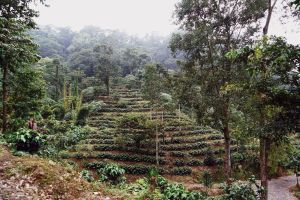 Having said all of the above, there are numerous good, creative, and relational ways of gardening and farming that honour, support, and even enhance almost all plants’ anciently intelligent cultures.
Many and various methods have long been practiced by indigenous people, and historical examples of intelligent cultural land-care practices are well-recognized.
Contemporary sustainable farming methods, although generally benign and favourable, still lack an inviolate embrace of nature’s subtler contemplative qualities.
Every compassionate, intelligent farming and gardening activity, when engaged as spiritual practice, can nurture all the necessary foundational attributes to support authentic future-horticulture – ethically, culturally, and beautifully.
* wet fog
~ ~ ~
If you have read this far, you may enjoy my book:
USA – Lightning Thunder Cows
AUSTRALIA – Lightning Thunder Cows
— Stuart Camps


 Envisioning Fearing No More