
 Most domestic camels never get the chance to grow up properly.
There’s a deep well of fundamental information they never learn about themselves, the world, and others.
Many of the camels you meet, although intelligent, will be developmentally retarded because they did not receive a complete cultural education. They may perform certain functions well, and be intelligent or attractive, but are generally not well-rounded, balanced, sane, and whole.
They are members of a species that should always live in herd cultures, where they can learn who they are and how to be. In captivity, they learn only the limited range of things we intend for them, and not much more. And even when they share spaces with other camels, those others have usually grown up in similar ways, and are likewise limited.
Consequently, for example, many camels have a poor relationship with food and digestion. Their physiological chemistries and constitutions are compromised. They don’t know how to self-manage their impulses. Their sense of boundaries is often poor. They don’t know how to relax, to feel, to think clearly, to breathe deeply, to learn subtleties, and to respond appropriately to life around them. This is because they have not been introduced to the “tools” of appropriate sustenance, and of culture, and shown how to exercise them.
In most cases, the camels we relate to are shadows of their real selves. To survive in captivity, they have conformed and adapted to artificial situations not of their natural world. Even camels fortunate to be parent and herd-raised will likely lose a great deal of their sense of who they are once they come into the hands of humans.
Many people also grow up missing out on learning how to be well-rounded humans, and we bring this lack of awareness into our relationships with camels. The information we share with each other about the best ways to be with camels usually includes a mix of fears, doubts, limits, hopes, and incomplete ideas about what camels are, and what they are “for”.
Seldom discussed about camels is that they are a variety of individuals.
And rarely considered is our need for further humanizing ourselves – before engaging with camels.
What I Want For Camels
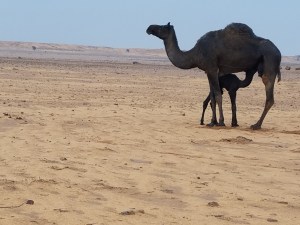 What I focus on in my work for camels is to teach them all the basics they missed out on as youngsters. Many of the problem issues that camels exhibit stem from those essential factors not having been learned. Only when the fundamentals are integrated into the camel’s sense of itself do we go forward into other conversations, such as riding, packing, and so on. When camels learn the basic facets of their culture, many of their so-called “issues” evaporate without ever needing to be directly addressed. And the most positive influence in all of this is a well-developed bond – a fully felt connection in relationship.
Results and Responses
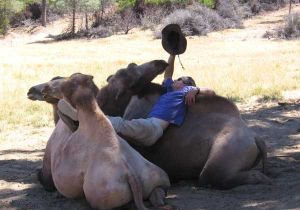
Through my engagement and coaching of camels, they soon become free of many of their inhibitions, fears, concerns, and struggles. Their confidence is restored and elevated. They become self-assured, able to express themselves, to trust and be trusted. The individual camel and human become consensual partners, each displaying responsibility for the relationship, each the caretaker of the other. The camel becomes capable of adeptly thinking and feeling its way through life in this human-made world.
It will heal from past indiscretions, including those of being bought, sold, and disregarded, possibly multiple times. And also, through the right education in practical, emotional, energetic, and spiritual terms, the camel becomes equipped to profoundly engage in the process of its eventual transition from this life, whenever that time comes, ideally compassionately supported by his or her human partner.
By the time my work is done, I want the camel to be realizing its genius, to be able to stand alongside any human without forgetting who he or she is. This process occurs within the natural “Field of Prior Unity”. Free camels know all about it, but humans and animals in captivity may need to learn it.
Every single camel who completes this process will enjoy physical, mental, and emotional health improvements along with a new outlook on life, and through your participation, you may experience something similar within yourself.
Working Together
If you like the sound of putting the camel first, so that a dream relationship can grow between you, please write or call to discuss the details for getting you on your way.
Email: stucamels@gmail.com
Phone: 04-9999-4708
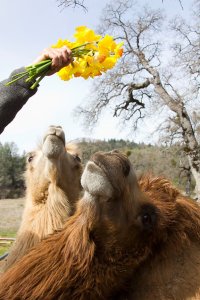
I will work with one camel at a time, or two or three. I also work with horses, roosters, dogs, parrots, monkeys, and others. It’s a similar process in each case.
The one pre-requisite before we begin is that the animal needs to know that you have a lifelong commitment to him or her.
I look forward to hearing from you.
Stuart Camps


 Envisioning Fearing No More
THANK YOU!!!! 8>)
LikeLike
Wish I could adequately express my depth of feelings when I read your words. Thank you forever!
LikeLike
I would love to hear more on your feelings at some point, Karen 🙂 should you ever care to share…
LikeLike
Great reading your blog post
LikeLike